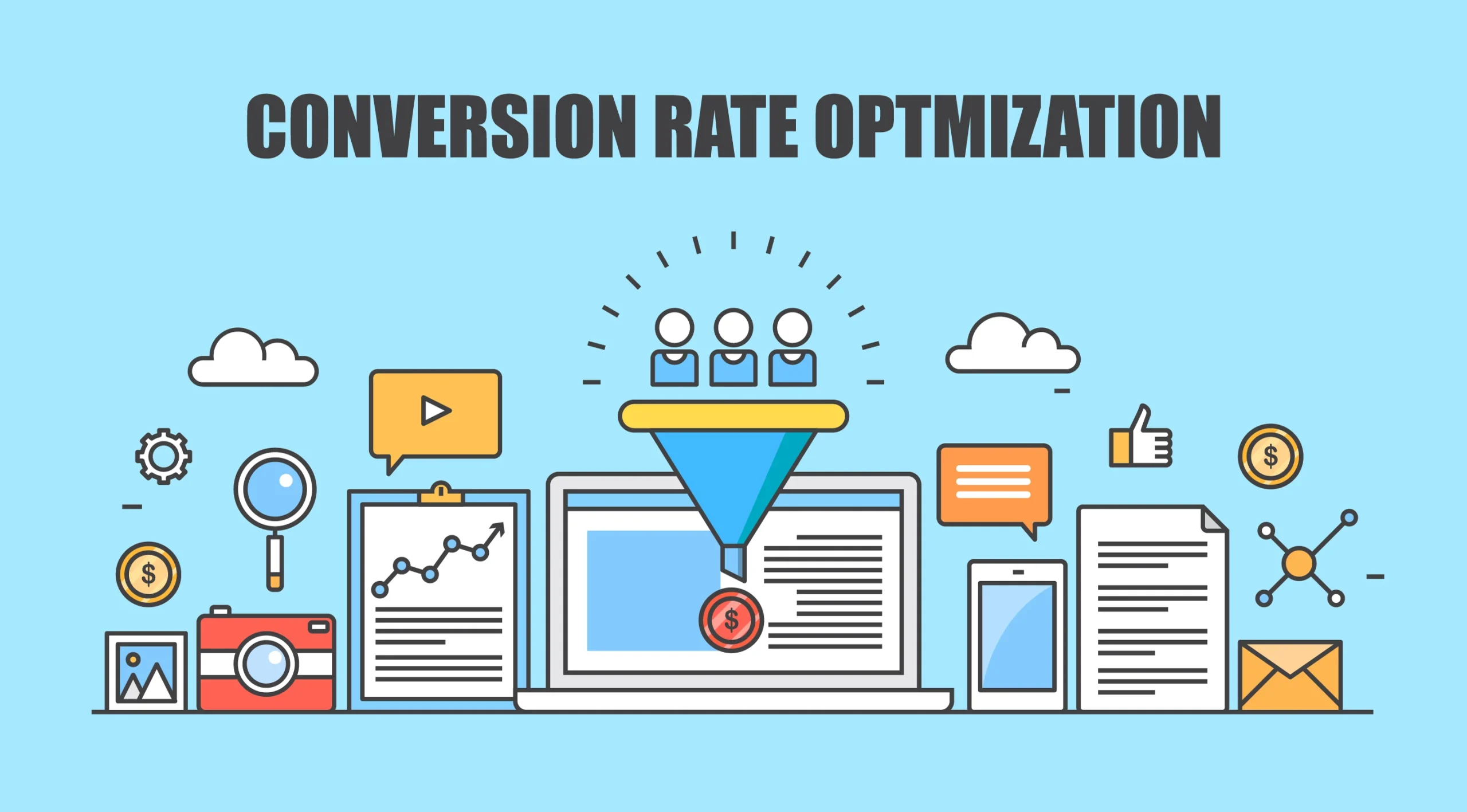
Most businesses pour money into driving traffic—ads, SEO, social media—and then wonder why revenue isn’t growing. The problem often isn’t the traffic. It’s what happens after visitors land on the page, which is why mastering Conversion Rate Optimization is essential to turning those raw clicks into actual customers.
Conversion Rate Optimization (CRO) is the process of increasing the percentage of website visitors who take a desired action – a purchase, sign-up, call, or download. The formula is simple: Conversion Rate = (Conversions ÷ Total Visitors) × 100. Even a 1% improvement can mean thousands of dollars in additional revenue without spending another cent on ads.
Why CRO Often Beats Buying More Traffic
Imagine your site converts at 2% with 10,000 monthly visitors – that’s 200 customers. Double your traffic to 20,000 visitors and you get 400 customers. But optimize your conversion rate to 4% with the same 10,000 visitors – same 400 customers. Zero extra ad spend.
CRO makes every marketing dollar work harder. It’s not glamorous, but it compounds.
Industry Average Conversion Rates
| Industry | Average CVR | Top Quartile CVR |
|---|---|---|
| E-commerce (retail) | 1.5% – 2.5% | 4% – 6% |
| SaaS / Software | 3% – 5% | 8% – 12% |
| B2B Lead Generation | 2% – 4% | 6% – 10% |
| Financial Services | 4% – 6% | 10% – 15% |
| Travel & Hospitality | 2% – 3% | 5% – 7% |
| Healthcare | 3% – 5% | 7% – 10% |
The CRO Process: Step by Step
- Audit your current funnel – Use Google Analytics or Hotjar to find where users drop off
- Form a hypothesis – ‘If we change X, we expect Y to improve because Z’
- Run A/B tests – Test one variable at a time; give tests enough traffic to be statistically significant
- Analyze results – Don’t just look at conversions; check bounce rate, time on page, scroll depth
- Implement winners, retest losers – CRO is a cycle, not a one-time fix
High-Impact CRO Wins
| Element | Test Idea | Typical Lift |
|---|---|---|
| CTA Button | Change copy from ‘Submit’ to ‘Get My Free Quote’ | 10% – 30% |
| Headlines | Benefit-led vs. feature-led headline | 15% – 40% |
| Page Speed | Reduce load time by 1 second | 7% – 20% |
| Social Proof | Add testimonials or review count near CTA | 10% – 25% |
| Form Length | Reduce fields from 8 to 3 | 20% – 50% |
| Hero Image | Real people vs. stock photos | 5% – 15% |
| Urgency/Scarcity | Add ‘Only 3 left’ or countdown timer | 8% – 22% |
Common CRO Mistakes
- Testing too many things at once – You won’t know what actually moved the needle
- Ending tests too early – Insufficient data leads to false positives
- Ignoring mobile – Over half of web traffic is mobile; desktop CRO gains mean little if mobile is broken
- Copying competitors’ design – What works for them may not work for your audience
- Optimizing for clicks, not completions – A high click-through rate on a CTA means nothing if the next step fails
CRO Tools Worth Using
| Tool | Purpose | Price |
|---|---|---|
| Google Optimize / VWO | A/B testing | Free / Paid |
| Hotjar | Heatmaps, session recordings | Free tier available |
| Unbounce | Landing page testing | From $74/month |
| Optimizely | Enterprise experimentation | Custom pricing |
| Crazy Egg | Scroll maps, click tracking | From $29/month |
A Real Lesson from the Trenches
One e-commerce brand increased conversions by 34% with a single change: they moved their ‘Add to Cart’ button above the fold on mobile. No new copy. No redesign. Just placement. The lesson? Before running complex tests, fix the obvious friction first.
The Bottom Line
CRO isn’t about tricking people into buying. It’s about removing every obstacle between a motivated visitor and the action they already want to take. Start with your highest-traffic pages, fix obvious friction points, then layer in systematic testing.
Your best source of growth might already be sitting in your existing traffic – you just haven’t unlocked it yet.